Article: Best Places to Experience Japanese Calligraphy in Tokyo


Best Places to Experience Japanese Calligraphy in Tokyo
Tokyo offers a captivating window into the art of Japanese calligraphy, or shodō, blending centuries-old tradition with contemporary creativity. From esteemed museums and specialized galleries to vibrant annual exhibitions, exploring calligraphy in Tokyo invites you into a world where the elegance of the brush meets modern artistic expression
Museums and Galleries Showcasing Calligraphy
Taito City Calligraphy Museum (Shodō Museum) – A specialist museum in Uguisudani dedicated to calligraphy. It was founded on the vast collection of Fusetsu Nakamura, a Western-style painter and calligrapher who spent 40+ years gathering historic Chinese and Japanese calligraphic works. The museum now holds about 16,000 pieces, including ancient inscriptions on bone and bronze, classical scrolls, sutras, and modern calligraphy, with several designated Important Cultural Properties. Regular exhibitions (rotating the collection) allow visitors to trace the evolution of calligraphy from Chinese roots to Japanese styles.
Tokyo National Museum (TNM) – Japan’s premier museum in Ueno, features calligraphy in its permanent collection and special exhibitions. The Honkan (Japanese Gallery) displays classical ink writings and sutras as part of the cultural heritage displays. TNM has hosted major calligraphy-focused special exhibitions in its Heiseikan wing – for example, “The Beauty of Japanese-style Calligraphy” (2013) showcased Heian-period masterpieces and the development of native kana script tradition. In 2019, TNM’s blockbuster “Unrivaled Calligraphy: Yan Zhenqing and His Legacy” drew nearly 200,000 visitors in five weeks, highlighting the enduring appeal of calligraphy exhibitions.
Tokyo Metropolitan Art Museum – A Ueno museum known as the historic “home of the public entry exhibition,” including calligraphy shows. Its collection holds 36 calligraphic works by 30 calligraphers (acquired 1963–1978), and it engages contemporary calligraphy through its annual Ueno Artist Project series. Notably, the Ueno Artist Project 2018: “Contemporary SHO – See, Know and Feel Today’s Calligraphy” brought together avant-garde pieces by emerging and veteran calligraphers, with artist commentary to help viewers appreciate modern sho art. The museum also frequently hosts group exhibitions of calligraphy associations in its galleries, keeping the art form in the public eye.
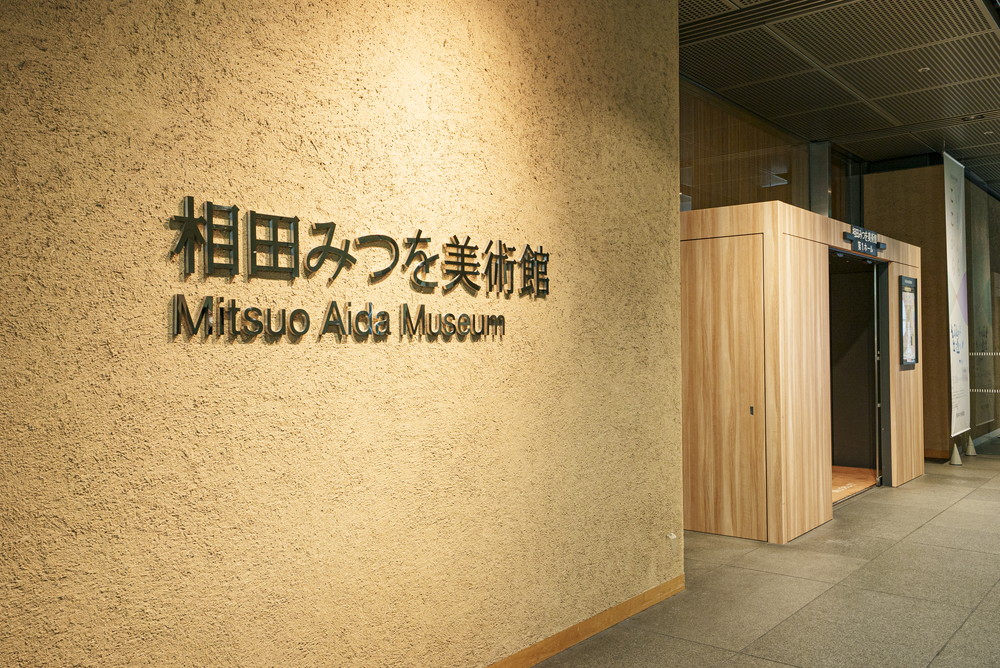
Mitsuo Aida Museum – A small museum in the Tokyo International Forum (Yurakucho) dedicated to the works of Mitsuo Aida, a 20th-century calligrapher-poet famed for his Zen-inspired 言葉書 (kotobagaki) – calligraphic poems. It presents around 100 of his pieces as a “calligraphy of the soul,” celebrating Aida’s status as the “Poet of Life” and his simple yet profound brush style. This museum offers an intimate look at how calligraphy can convey spiritual and philosophical messages in modern times.
Gallery Kitai – A private art gallery in Hanzomon (Chiyoda) specializing in contemporary calligraphy. Founded in 1998 by Yasuo Kitai, it has long championed sho as fine art. Gallery Kitai represents modern calligraphic artists such as Sogen Chiba, whose bold works (including a series responding to the 2011 earthquake) have been featured in museum exhibitions. This gallery and others like it (e.g. Seizan Gallery, Tokyo Gallery + BTAP) frequently hold calligraphy-centric art shows, demonstrating how modern galleries integrate traditional ink art into Tokyo’s contemporary art scene.
Annual and Recurring Calligraphy Exhibitions in Tokyo
Mainichi Shodō Exhibition – The largest annual calligraphy exhibition in Japan, organized by the Mainichi Newspaper and Mainichi Shodō Association. It first launched in 1948 and now attracts about 30,000 entries each year, covering all seven calligraphic categories (traditional to avant-garde). Every July in Tokyo (recently at the National Art Center, Tokyo in Roppongi), around 15,000 selected works are displayed, after which the exhibition travels to major cities nationwide. With over 100,000 visitors yearly, the Mainichi exhibition is a centerpiece event – even Emperor Emeritus Akihito and Empress Michiko have been noted to attend in admiration of the calligraphic art
mainichi.jp. For enthusiasts, it’s an unparalleled chance to see a vast range of styles from top masters to talented newcomers.
Dokuritsu Sho (Independent Calligraphy) Exhibition – A prestigious annual sho exhibition held each January at the National Art Center, Tokyo, organized by the Dokuritsu Shojindan Foundation. In 2025, the 73rd exhibition showcased some 1,823 works by calligraphers across Japan, drawing over 17,000 visitors (including many from overseas). True to its name “Dokuritsu” (independent), this foundation – established in 1952 by Yūkei Teshima – promotes free, contemporary expression in calligraphy. The exhibits often include monumental avant-garde pieces covering entire walls, emphasizing individual creativity and powerful emotion in brush and ink. The event usually also offers workshops or demos (for example, a hands-on calligraphy workshop for international visitors was held during the 2025 exhibition), making it an engaging start to Tokyo’s art calendar each year.
Nitten (Japan Fine Arts Exhibition) – Calligraphy Division – Nitten is Japan’s biggest annual juried art exhibition covering five fields (Japanese-style painting, Western-style painting, sculpture, craft, and sho calligraphy). It takes place each fall (October–November) at the National Art Center, Tokyo. The calligraphy section of Nitten, established post-WWII to elevate shodō as a fine art, is highly competitive – having one’s work accepted or awarded in Nitten is a hallmark of a calligrapher’s career. Visitors to Nitten can see top-ranked contemporary calligraphic works side by side with paintings and sculpture, reflecting how calligraphy stands alongside other art forms in Japan’s modern art scene.

Seishinsha Contemporary Calligraphy Exhibition – An annual exhibition every April (recently held at the Ueno Royal Museum) organized by the Seishinsha school, which was founded by Masumi Kunii (1917–2009) – a pioneer of modern calligraphy. By 2024 it marked the 78th year since Kunii started Seishinsha. This exhibition presents dozens of works (around 70 pieces in 2024) of half-size shikishi calligraphy by both Japanese and international artists, showcasing the “spirit” style passed down from Kunii. Kunii’s own avant-garde works are also displayed to illustrate the evolution of modern calligraphy. Admission is usually free, making it an accessible event for the public to appreciate innovative calligraphic art in a historic Ueno venue.
Meiji Jingu New Year Youth Calligraphy Exhibition – A yearly exhibition every January at Meiji Shrine (Harajuku) featuring award-winning works by children. In the 71st edition (Jan 2025), over 30,000 students nationwide submitted entries, and the top 300 pieces (Special Award winners) were displayed on the shrine grounds from Jan 5–30. Aimed at nurturing young talent and honoring the tradition of kakizome (first calligraphy of the year), this exhibition offers a heartwarming and culturally rich experience, as visitors can see the beautiful efforts of elementary and junior-high calligraphers in the serene context of a Shintō shrine.
Notable Past Calligraphy Exhibitions in Tokyo
“The Beauty of Japanese-style Calligraphy” (Tokyo National Museum, 2013) – A landmark exhibition tracing the history of wayō (Japanese-style) calligraphy from its Chinese origins to its flowering in the Heian period. It featured National Treasure works like the Poems of Bai Juyi (1018) and the Midō Kanpakuki diary, illustrating how Heian masters Ono no Tōfū, Fujiwara no Sukemasa, and Fujiwara no Kozei established Japan’s elegant kana-based calligraphic tradition. This exhibition was the first to publicly display some treasures (one item was newly inscribed on UNESCO’s “Memory of the World”), making it a must-see for calligraphy connoisseurs.
“Tokyo ‘Sho’ 2017: Japanese Calligraphy Today” (Tokyo Metropolitan Art Museum, 2017) – A cooperative exhibition uniting 18 public calligraphy groups from the Tokyo-Kantō area. Each group selected standout artists, resulting in a showcase of 38 calligraphers from the “rising generation.” The exhibit presented a wide spectrum of genres side by side – from classic kanji and kana scripts to modern poetic calligraphy, large-scale characters, seal-engraving, and pure abstract avant-garde works.
“Contemporary SHO: See, Know and Feel Today’s Calligraphy” (Ueno Artist Project 2018) – The second Ueno Artist Project exhibit (Nov 2018 – Jan 2019) spotlighting six prominent calligraphers active in various shodō associations. It emphasized calligraphy appreciation for modern audiences: each artwork was accompanied by the artist’s commentary to guide viewers in understanding the creative intent. The show included bold works like Chiba Sōgen’s dynamic ink abstractions and Akiyama Kazuya’s fluid avant-garde pieces, among others. By providing context and interpretation, this exhibition had a significant impact in making avant-garde calligraphy accessible to museum-goers, and it reinforced the idea of calligraphy as contemporary art that can be appreciated visually even without reading the characters.
“Unrivaled Calligraphy: Yan Zhenqing and His Legacy” (Tokyo National Museum, 2019) – A high-profile international exhibition focused on the revered Chinese Tang-dynasty calligrapher Yan Zhenqing and his influence on East Asian calligraphy. It brought together rare loans from Japan, China, and Taiwan – most notably Yan’s “Requiem to My Nephew” (Draft), an 8th-century masterpiece on loan from the National Palace Museum in Taipei. The loan sparked media attention and even political debate due to its rarity and cultural importance. Despite (or because of) the buzz, the exhibition was enormously popular – averaging 5,778 visitors per day (nearly 199,000 total) – making it one of the world’s top-attended shows of 2019. “Unrivaled Calligraphy” not only displayed ancient calligraphy and related art (paintings, engravings) but also highlighted how a single calligrapher’s style reverberated through centuries, thereby elevating public appreciation for calligraphy’s artistic and historical value.
Hidai Nankoku Retrospective (Tokyo Gallery + BTAP, 2024) – A notable recent gallery exhibition celebrating the avant-garde calligrapher Hidai Nankoku (1912–1999). Nankoku, the son of Hidai Tenrai (known as the “father of modern Japanese calligraphy”), broke away from orthodox scripts to create radical “unreadable” works of pure line. The 2024 exhibition focused on his 1950s–60s output, a period when Nankoku’s exploration of what he called the “spirit line” challenged the definition of calligraphy as art. One highlight was the display of a colossal 4.6×3.5m piece from 1964 that had earlier been featured in the M+ Museum (Hong Kong) opening; its inclusion underscored Nankoku’s profound impact on both Japanese postwar art and international audiences. This retrospective shed light on the avant-garde Bokujin movement and reinforced Nankoku’s legacy as a bridge between calligraphy and abstract art.
Current and Upcoming Exhibitions (2025)

Yuichi Inoue Exhibition – “Jissai hetade kusatte imasu…” at Kotaro Nukaga Gallery (Tennozu, Tokyo), Feb 15 – Apr 12, 2025. – A solo exhibition of the renowned avant-garde calligrapher Yuichi Inoue (1916–1985), titled with a humorously self-deprecating quote of his (“I’m really bad at this, it’s rotten… maybe it’s the brush’s fault”). This gallery show offers a rare look at Inoue’s process: it displays 11 of his iconic one-character calligraphy paintings alongside his teaching specimens and personal letters and even includes “Aa Yokogawa Kokumin Gakkō” (1978) – a famous large work born from Inoue’s traumatic experience of the 1945 Tokyo air raids. Admission is free and the exhibit is drawing both art fans and calligraphy practitioners, illustrating Inoue’s enduring influence.
The 77th Mainichi Shodō Exhibition – Opening July 2025 in Tokyo (likely at National Art Center). – The next annual Mainichi calligraphy extravaganza will launch in early July, continuing a tradition since 1948. Expect tens of thousands of works submitted nationwide and around 15,000 on display, ranging from classical poems beautifully rendered on scrolls to abstract ink splash compositions by avant-garde artists. The sheer volume and quality make it a summer highlight. Visitors can browse rooms organized by category (seal script, cursive, kana, etc.), and see top award-winning pieces (including the Yomiuri Prize, Taira Prize, etc. for different styles). This exhibition is a living history of Japanese calligraphy each year, and many works exhibited here go on to be shown internationally.
Important Japanese Calligraphers Frequently Exhibited
-
Yuichi Inoue (1916–1985) – A titan of modern Japanese calligraphy. Inoue pioneered an expressive “one-character” style, fusing traditional calligraphy with abstract expressionism, and co-founded the postwar avant-garde Bokujin-kai group. His bold works like 「花」 (“Hana”) and 「夢」 (“Yume”), painted with large brushstrokes and splashes of ink, are widely exhibited in Tokyo galleries and museums. Inoue’s pieces have been shown in contexts ranging from MoMA New York (1954) to Tokyo’s National Museum of Modern Art, and he remains one of the most internationally recognized calligraphers of the 20th century.
-
Hidai Tenrai (1872–1939) – Often called the father of modern Japanese calligraphy. Tenrai revolutionized shodō education and art in the early 20th century by studying ancient Chinese models and advocating creative individuality. He founded the Institute of Calligraphy Studies and mentored the next generation of masters. While Tenrai’s own works (polished classic styles) are in museum collections, his significance is frequently highlighted in Tokyo exhibitions that trace modern calligraphy’s roots. Many shows, such as the Nankoku retrospective, reference Tenrai’s influence in paving the way for avant-garde calligraphy.
-
Hidai Nankoku (1912–1999) – Son of Tenrai, and a trailblazer of avant-garde calligraphy. Nankoku is famed for breaking free of legible form; in 1945 he began creating works of pure line, calling them “spirit letters,” which shocked the calligraphy world. His best-known piece 「電」 (“Den” for “lightning”), rendered as an abstract lightning bolt of ink, sparked debates on what counts as calligraphy. Nankoku’s large-scale and “unreadable” works are exhibited to illustrate postwar innovation – for instance, his pieces have appeared in exhibitions at Tokyo Gallery (2024) and in museum surveys of Japanese modern art, underlining his profound cross-genre impact.
-
Yūkei Teshima (1900–1987) – A master calligrapher and founder of the Dokuritsu Shojindan. Teshima is revered for promoting calligraphy as a form of modern art imbued with personal emotion. He emphasized breaking from strict formality and encouraged expressive, individualistic works. Teshima’s philosophy and some of his works are often highlighted at the annual Dokuritsu exhibitions. He also worked to spread sho internationally, which is noted in exhibition catalogs – cementing his status as an important figure whose legacy is seen whenever contemporary calligraphers freely experiment on the gallery walls.
-
Masumi Kunii (1917–2009) – A pioneer of modern kana calligraphy and founder of the Seishinsha school. Kunii is hailed for blending the flowing grace of kana (Japanese syllabary) with modern sensibilities. He sought to infuse classical forms with new life, and his works often feature spontaneous, dance-like strokes. The Seishinsha annual exhibition in Tokyo displays some of Kunii’s pieces each year, and his influence is evident in many contemporary kana specialists’ works. He is remembered as a cultural asset who helped calligraphy bridge into the modern art era while keeping the spirit of elegance from past masters alive.
-
Sōgen Chiba (b. 1940) – A leading contemporary calligrapher known for large-scale abstract ink works. Chiba’s style often involves bold sweeps of black ink that respond to modern events or personal reflections (for example, his series “3.11 Requiem and Revival” commemorating the 2011 disaster). He has been active in the Shodō Geijutsu-In (Calligraphy Art Institute) and was featured as a representative artist in the 2018 Ueno Artist Project exhibition. Tokyo exhibitions frequently include Chiba’s works when showcasing avant-garde calligraphy, and Gallery Kitai represents him internationally. His pieces demonstrate how traditional ink can convey contemporary emotions and are often cited in discussions of calligraphy’s relevance today.
-
Mitsuo Aida (1924–1991) – A poet-calligrapher beloved for his simple, gentle style and philosophical sayings brushed in hiragana. Aida’s most famous quote paintings (such as 「にんげんだもの」 (“We are all only human”) ) are cultural touchstones in Japan. The Mitsuo Aida Museum in Tokyo permanently exhibits his works, and they also occasionally travel in special exhibits about Zen and calligraphy. His handwriting, though childlike and plain at first glance, exudes a warm spirituality that has made his pieces staples in calligraphy calendars, books, and shows. Aida’s popularity exemplifies how calligraphy can resonate with the general public on a personal level.
Conclusion
Exploring Japanese calligraphy exhibitions in Tokyo provides a unique journey through tradition and innovation. From revered institutions such as the Tokyo National Museum and Taito City Calligraphy Museum to dynamic contemporary galleries and engaging annual events, Tokyo's calligraphy scene is vibrant and diverse. As calligraphy continues to evolve, merging ancient styles with modern artistic expressions, the city's exhibitions offer something for every art enthusiast.
If you're inspired by the elegance and creativity of Japanese calligraphy, explore our curated collection of authentic calligraphy art here. Discover beautiful pieces crafted by skilled artists, bringing a touch of timeless Japanese culture into your home or office.